Spring cleaning, red packets and reunion dinners... we've got everything you need to know about Chinese New Year traditions in Singapore.
Chinese New Year traditions in Singapore go beyond festive snacks and public holidays — they shape how families spring clean, gather for reunion dinners, and observe customs. But if you’re not familiar with local practices, it’s easy to accidentally break a taboo. From what you should (and shouldn’t) do on the first day of CNY to why lo hei plays such a big role here, our guide covers the traditions, superstitions, and dos and don’ts unique to Chinese New Year in Singapore.
What is Chinese New Year in Singapore?

Chinese New Year – also called Lunar New Year – is one of the biggest cultural celebrations for Singapore’s Chinese community. It marks the beginning of the lunar calendar year, and celebrations typically last up to 15 days, though only the first two days are public holidays.
Chinese New Year traditions in Singapore see families get together for hearty feasts, exchange well wishes and red packets, and participate in cultural activities. Popular customs, such as wearing red and gathering for a reunion dinner, are said to usher in prosperity, happiness and good fortune for the year ahead.
Chinese New Year traditions practised in Singapore
Spring cleaning and decorating the home

Before the festivities begin, households in Singapore often clean their abode and donate unwanted items, as it’s symbolic of clearing out old energy and bad luck. It’s all about welcoming new and good fortune this season, which means it’s the best time to engage spring cleaning services in Singapore! Plus, it’s practical as families want to welcome visitors into a spick and span home.
On the first day of Chinese New Year, sweeping and cleaning are traditionally avoided, as it’s believed that they could sweep away good luck and prosperity.
For Chinese New Year decorations, homes are typically decked out with auspicious red items: lanterns, couplets, and the character 福 (fu), meaning “fortune” or “good luck.” Red decorations are said to chase away evil spirits and invite positive energy for the new year.
Gathering for reunion dinner

CNY reunion dinners in Singapore are all about bringing the family together, and they traditionally happen on the eve of Chinese New Year. Everyone gathers to share a feast that symbolises unity and prosperity. But these days, schedules can get busy, so it’s common to host them a few days – or even weeks – before CNY, especially if you’ve got multiple gatherings lined up with different groups.
Some folks go all out by booking tables at Chinese restaurants in Singapore or ordering from catering services in Singapore, while others stick to the cosy charm of home-cooked meals shared around the dining table.

Lo hei: The act of tossing yusheng
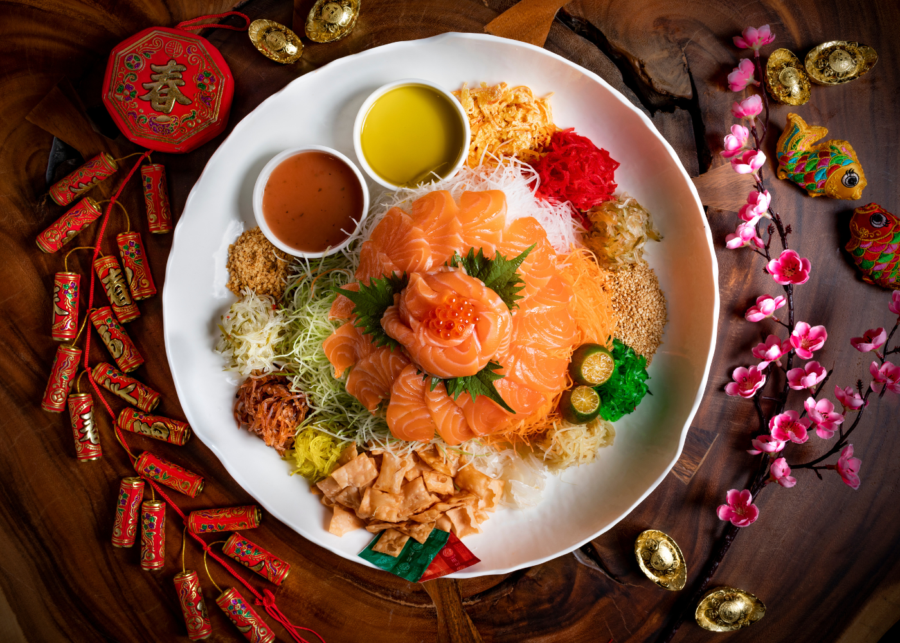
No reunion dinner or CNY gathering is complete without the tradition of tossing yusheng in Singapore. This colourful raw fish salad is more than a starter – lo hei is a lively communal custom. As you mix the ingredients with your chopsticks, everyone recites auspicious yusheng sayings and tosses the salad as high as possible for good luck (the higher, the better).
Expect lots of enthusiastic “huat ah!” (prosperity) shouts, a bit of chaos, and plenty of laughs as ingredients go flying. Sure, it might get messy, but that’s all part of the fun. Rivers of gold!
House visits and auspicious greetings
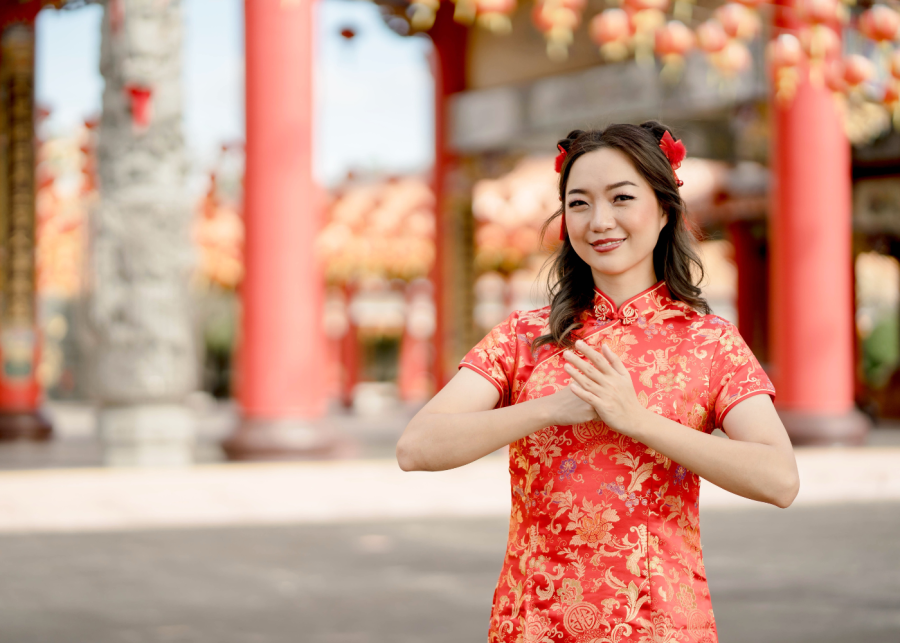
It’s customary to visit family and friends to exchange Chinese New Year greetings in Singapore. Mandarin oranges, symbols of luck and prosperity, are often shared. People greet one another with joyous phrases like “Gong Xi Fa Cai”, meaning “wishing you prosperity”. During house visits, loved ones enjoy nibbling on goodies like pineapple tarts and bak kwa, among other Chinese New Year snacks in Singapore.
Chinese New Year dos and don’ts in Singapore
CNY traditions to follow

- Wear red and bright colours: Red is believed to be the colour of luck and fortune, but in today’s fashion-forward world, any bold colour is fair game – just remember to keep it fresh (new clothes, new beginnings). Check out our pick of cheongsams in Singapore for shopping inspiration!
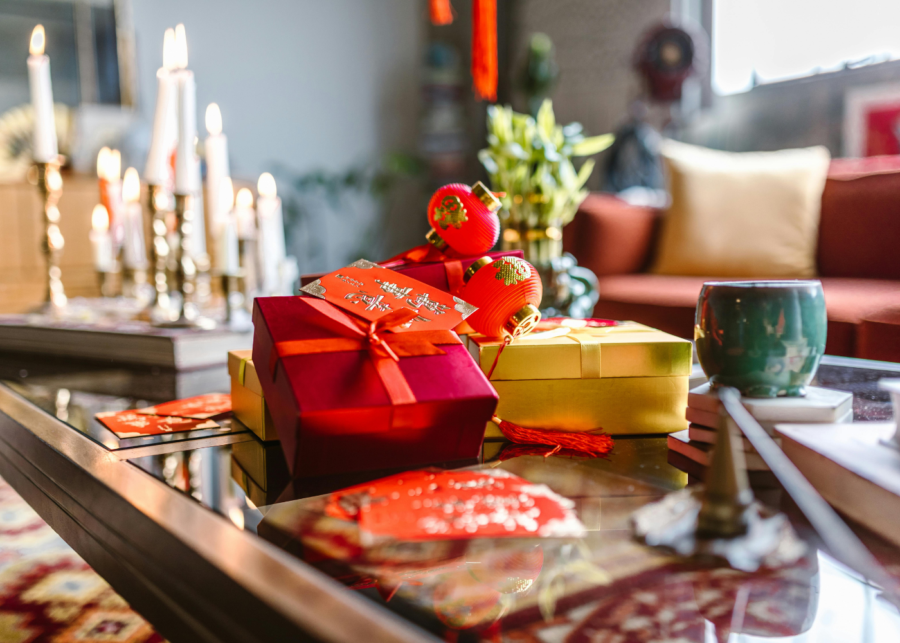
- Give and receive red packets (ang baos): Red envelopes containing money are gifted by married couples to children and younger relatives as blessings for the new year. Even numbers are preferred, while the number four is avoided due to its association with death in Chinese culture. Ang bao rates for CNY vary depending on your income and your relationship with the receiver, but they’re generally a meaningful gesture, so don’t stress out too much over what you’re giving.
- Stay up late on Chinese New Year’s Eve: Known as shou sui, this tradition on the evening of the reunion dinner is believed to bring parents longevity and good fortune. That’s why it’s common for families to chat and chill while waiting for the clock to strike midnight.
What to avoid during CNY
- No sweeping or cleaning on Chinese New Year: Cleaning during the new year is believed to sweep away wealth and good fortune. Even taking out the garbage is seen as tossing out prosperity from the home.
- Avoid sharp objects: Items like knives and scissors are traditionally kept out of sight because they symbolise cutting off good fortune.
- Don’t use unlucky words: Negative or inauspicious terms related to death, illness or bad luck are usually avoided in conversations during CNY.
- Avoid black or white clothing: These colours are associated with funerals, which is why they’re traditionally frowned upon during Chinese New Year celebrations.
- Don’t get a haircut: Washing your hair on the first and second day of CNY is seen as bad luck, as it symbolises washing away your fortune. The same goes for haircuts. Plus, you’ll want to get your locks done before CNY to avoid the crowds and surcharges.
How Chinese New Year is celebrated in Singapore

- Lion dance performances: A longstanding CNY tradition in Singapore, these are performed at homes and in public spaces to bring good fortune and wealth. The lively showcase combines martial arts, acrobatics, and music for a breathtaking spectacle.
- Events and light-ups: There are plenty of Chinese New Year events in Singapore, including popular ones like Chingay Parade, which features colourful floats, dancers and cultural performances, and River Hongbao, with its lantern displays and traditional music acts.
- CNY festivities: Shopping malls, community clubs and heritage districts like Chinatown come alive with decorations, performances, markets, and lion dance shows during the festive period.
- Greeting the God of Wealth: A central figure in Chinese folklore and Taoism, the God of Wealth (also called Cai Shen or Cai Shen Ye) is a prominent figure during CNY, as it’s believed that he possesses the power to grant wealth. Spot him at shopping mall celebrations and lion dance performances carrying a pot of gold (aka chocolate coins) or a basket of sweets to spread good fortune!
That’s all the Chinese New Year traditions you need to know in Singapore.
Frequently Asked Questions
Is Chinese New Year a public holiday in Singapore?
Yes, the first two days of Chinese New Year are gazetted public holidays in Singapore, and many businesses close or operate on shorter hours during this period.
How do people in Singapore celebrate Chinese New Year?
In Singapore, Chinese New Year is celebrated with reunion dinners, house visits, lo hei (tossing yusheng), lion dances, and exchanging red packets (ang baos), alongside public festivities in areas like Chinatown and major shopping malls.
What should you avoid doing during Chinese New Year in Singapore?
Common taboos include cleaning or sweeping on the first day, using unlucky words, breaking items, wearing black or white, and giving gifts associated with bad luck, such as clocks or sharp objects.
Can non-Chinese people celebrate Chinese New Year in Singapore?
Yes, Chinese New Year is widely celebrated across Singapore’s multicultural society, and non-Chinese locals and visitors often join in through festive greetings, meals, and public events.
Why is lo hei such a big deal during Chinese New Year in Singapore?
Lo hei symbolises prosperity, abundance and good fortune, and tossing the ingredients while saying auspicious phrases is believed to bring luck. It has become a key part of Singapore’s Chinese New Year celebrations, especially at group gatherings.