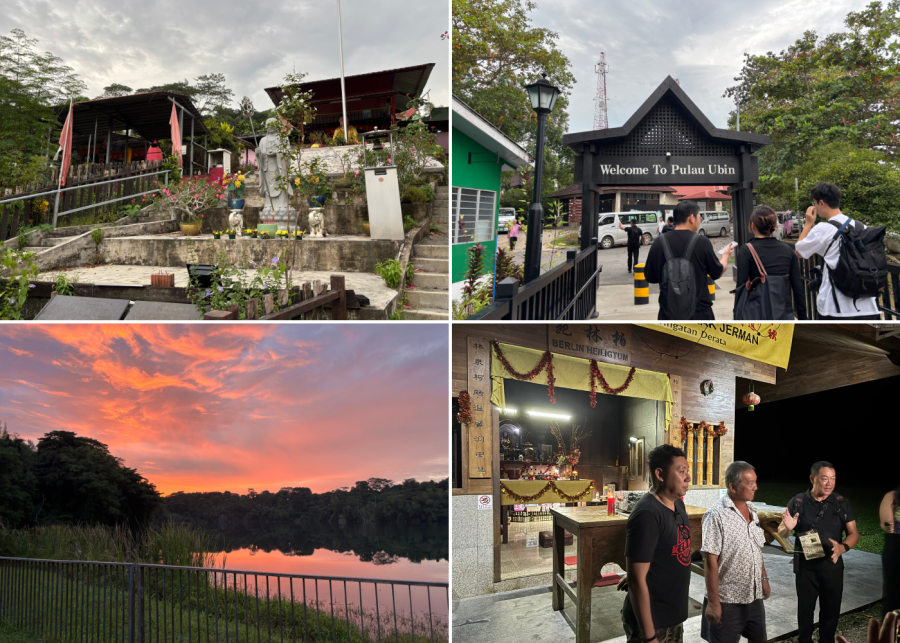
Read our Haunting Heritage Tours review for the lowdown on Pulau Ubin’s Wei Tuo Temple, Ketam Quarry, and the German Girl Shrine.
When I got the invite to review Secrets of Ubin by Haunting Heritage Tours, I was immediately struck with fear. October is the spookiest month of the year, and Pulau Ubin has an ominous reputation for being haunted, with spooky shrines and abandoned villages (god forbid if I run into a pontianak – a ferocious vampiric spirit). Nevertheless, my curiosity got the best of me, and the promise of undiscovered gems and never-before-heard-of stories was delivered. Read on to find out more! P.S. for spooky encounters, check out our guide on ghost tours in Singapore.
Haunting Heritage Tours: Details at a glance
Best for: Supernatural adventure seekers, anyone looking for alternative walking tours, and those interested in learning about Pulau Ubin’s past
When: 18, 25 & 31 October, 5.30pm to 9.15pm
How much: $158 per person; includes two-way ferry, full island transport, refreshments, and exclusive site access
Address: Secrets of Ubin, meet at Changi Point Ferry Terminal, 51 Lorong Bekukong, Singapore 499172
How we got to Pulau Ubin
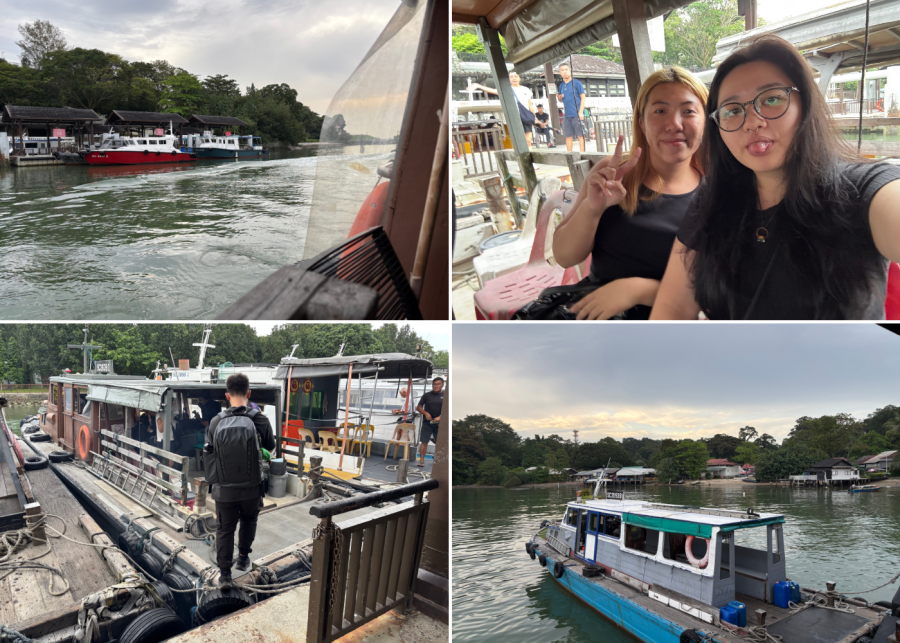
For anyone who’s never visited Changi Point Ferry Terminal, simply head down the stairs from the main sign to access the jetty. There are no signs, so keep an eye out for Eugene, the founder of Haunting Heritage Tours. He warmly welcomed my videographer and me, introducing himself and his co-host, Yong Liang.
The two are passionate about bringing the stories of Pulau Ubin to the public. Eugene is an avid paranormal explorer, keen to share unique (and sometimes ghostly) experiences. Meanwhile, Yong Liang is a native Ubinite who actively shares stories about Pulau Ubin through tours. Having lived a chunk of his life in Ubin, he offered local insights into the island during our visit.
I recommend arriving early, as the bumboat departs at 5.45pm sharp. If you’re late, make your own way to Pulau Ubin at your own expense ($4 per person). Tip: use the bathroom before departing if you’re uncomfortable with the island’s old-school toilets. If you get motion sickness, prepare medication as the 15-minute boat ride can be bumpy.
The smell of the ocean did wonders to quell my nerves and my initial fears. Our group also consisted of over 20 people, so I felt pretty safe in case anything suspicious happened along the way.
Wei Tuo Temple: A place of mysterious miracles
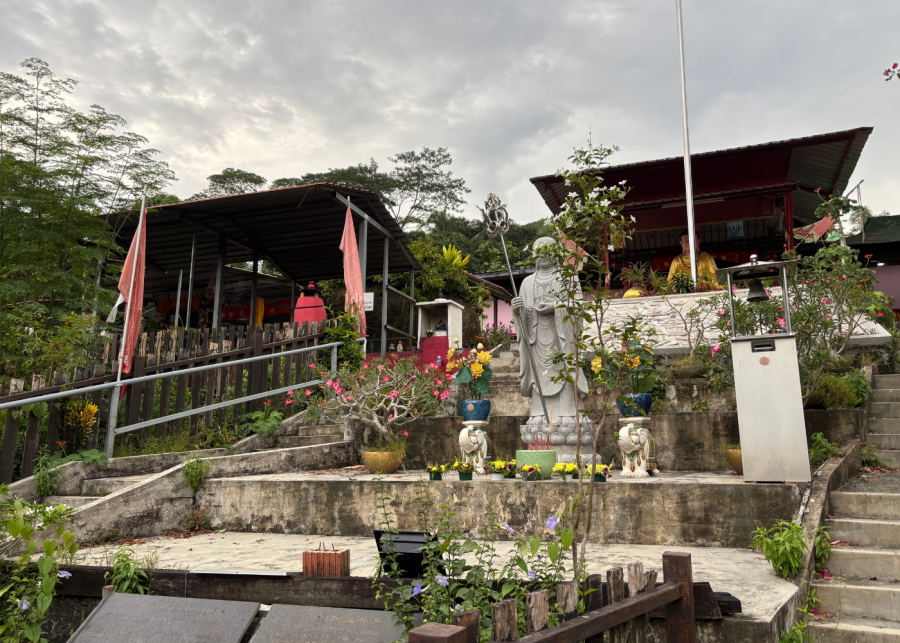
After a 10-minute car ride, we arrive at Wei Tuo Temple. One of Ubin’s oldest standing temples, it’s considered a sanctuary that has watched over the island for decades. After walking up a flight of stairs, I’m greeted with the smell of incense and herbal tea. Religious statues filled the temple, with deities from several countries represented. Thank goodness for the evening light, because I’d be spooked if we entered at night.
We take a seat around the temple’s 82-year-old caretaker – a lady who reminds me of my grandmother with her sharp tongue and witty sense of humour. She regales us with stories of her life after arriving in Ubin, and occasionally teases our guide, Yong Liang, whom she’s known for years.
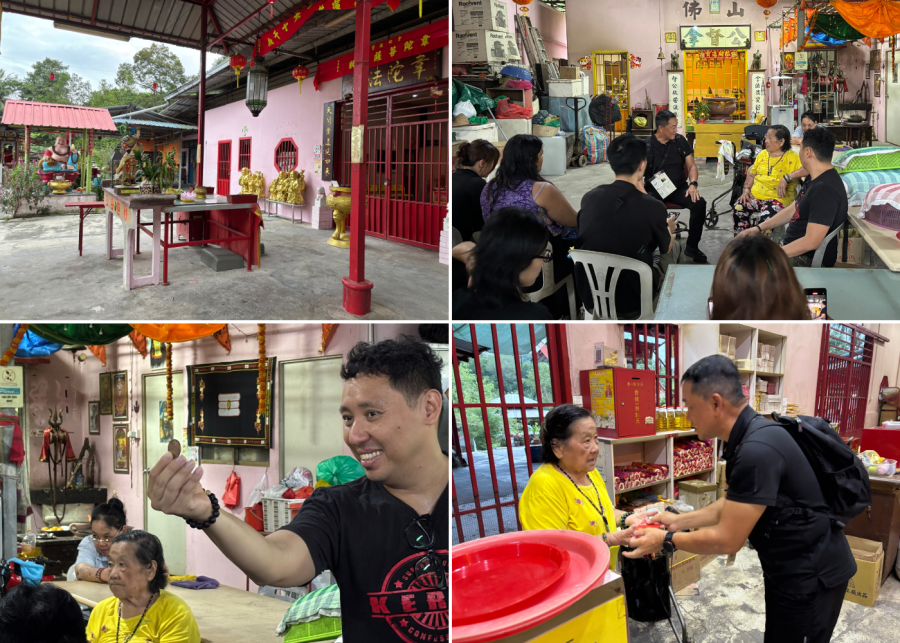
Next, our attention turns to a giant boulder painted gold, seemingly out of place amongst the statues of deities. It turns out this boulder is linked to what the locals consider a miracle.
Over 60 years ago, when explosive works shook the quarry, the boulder crashed downwards towards the village. However, to everyone’s shock, no one was harmed, and the boulder missed every statue in the temple. Even I, a sceptic, can’t explain how or why.
Our visit ends with a teaser of the tour’s highlight – a lone artefact previously found in the hands of the German girl, whose shrine sits on the island. Yong Liang exclaims he gets goosebumps as he takes the coin from the caretaker to show us. Spooked by the stories told, I opt not to hold onto it.
Ketam Quarry: Where man meets ancient beings

Our next stop? Ketam Quarry, where I witnessed one of the most beautiful sunsets I’ve ever seen. Our guides explain that the land we stood on was considered sacred a long time ago, as it was the home of ancient spirits. But the beauty we saw hid some dark stories.
With a sombre expression, Eugene tells us about an ancient being peacefully in slumber until it was awoken by the quarry blastings. As we progressed as a nation, spiritual warnings were brushed off. He says the spirit demanded sacrifice for the disturbance – a life every two years. This (allegedly) included Yong Liang’s uncle, who previously worked in the quarry but passed away in an accident.
Yong Liang recounts his own near-death experience. Mischievous during his young age, he went swimming in the lake with his friends. Little did they know an incoming storm would lead to lightning strikes that penetrated the water, electrocuting them all.
“It was like being frozen in time,” he says. As his body sank to the bottom of the lake, he waited two agonising minutes for the electricity to pass before he clawed his way out of the water. Safe to say, I’ll be following lightning risk alerts closely the next time I go to the beach.

The German Girl Shrine: Famed folklore retold
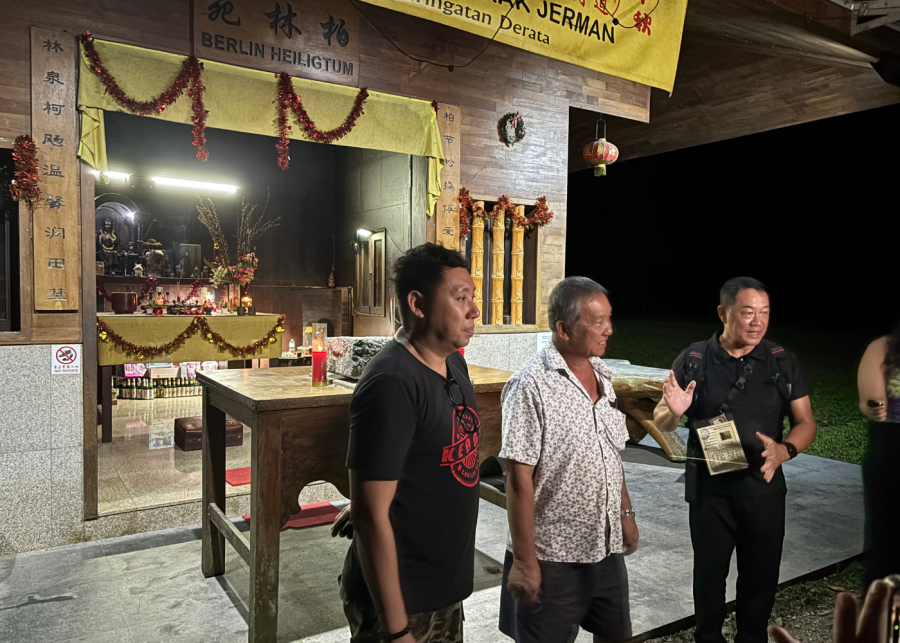
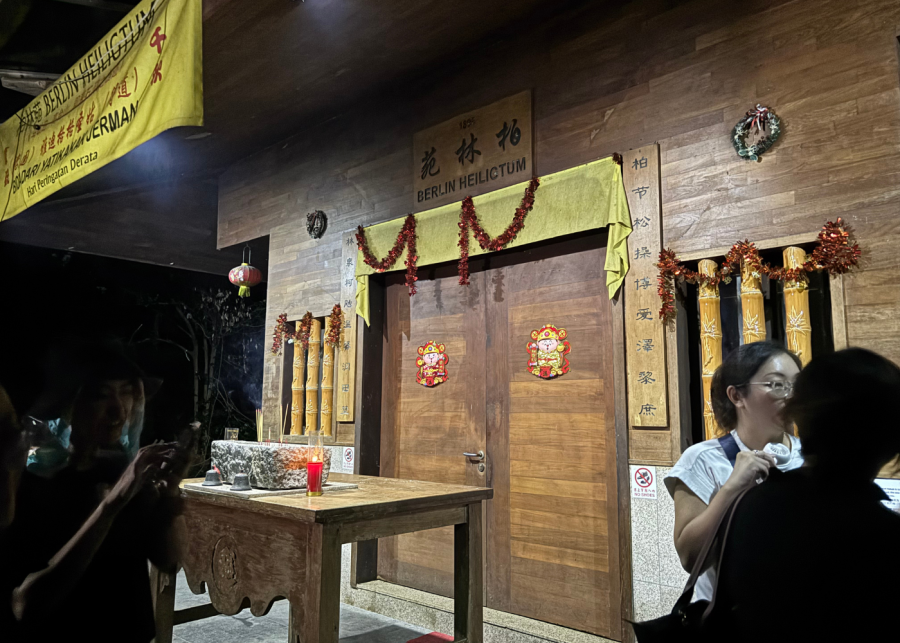
As we walk from Ketam Quarry to the German Girl Shrine, the sun sets, leaving us in near-complete darkness. The light at the end came from the highlight of this Pulau Ubin tour: the German Girl Shrine.
Folklores tell us that in the 1910s, a German family once resided in Ubin and owned a coffee plantation. However, when World War I erupted, they were forced to flee. Unfortunately, they lost their daughter during the escape. Eugene tells us that conflicting stories began to emerge after. Some allege the German girl fell off a cliff; others claim she was buried elsewhere. Some even say she was a Javanese princess.
Shrine keeper Ah Cheng has been taking care of the shrine for over 20 years. He shares with us previous incidents of theft, where the original urn with the German girl’s ashes and artefacts was stolen.
“So, who’s in the urn?” I ask curiously. Eugene explains that the urn in the shrine sits as a symbolic placeholder, as the original was never recovered. It led to my next question – if the German girl’s remains (and supposedly her spirit) were no longer there, was an entity present? The answer: yes.
According to Eugene, during his paranormal investigation at the shrine more than 10 years ago, he heard footsteps shuffling behind him before his head was cradled in someone’s lap.
“It felt like an elderly energy,” he reveals. He concluded that the spirit lingering near the shrine was possibly a datuk gong – a type of nature spirit that resided in trees. Cue my goosebumps.
A brush of paranormal activity
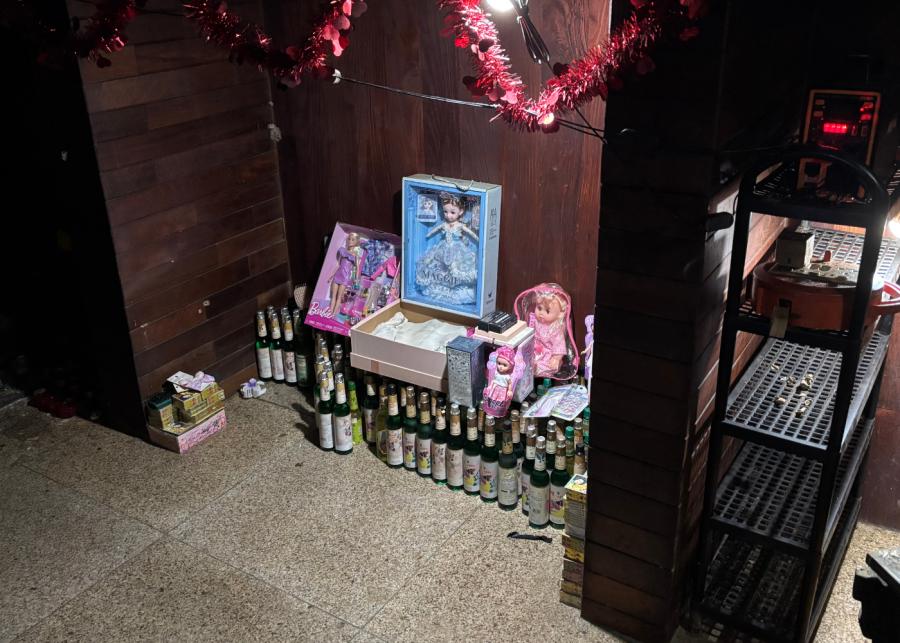
Despite the confusion over the German girl’s identity, one part of the whispers stays consistent – the spirit is Pulau Ubin’s lady luck. Stories are told about a man down on his luck, who had constant dreams of a girl from the island asking for a Barbie doll. Supposedly, after he offered a doll to the shrine, he won first prize in the local lottery.
My tour group and I can attest to the luck the shrine brings. During our visit, we requested numbers for the next lottery. A few days later, the exact numbers hit the first prize in the 8 October draw! It’s not solid evidence of the spirit’s existence, but it’s a coincidence I can’t ignore.
With morale high and our curiosities piqued, I walk quietly through the shrine to browse various gifts left behind. No chills or weird sounds, just a handful of Labubus and some dusty Barbies. I felt cool as a cucumber until I heard someone mention the German girl’s spirit watching us. No panic; I shuffled out of there as quickly as I could.
A kampong house experience: Meet with the locals
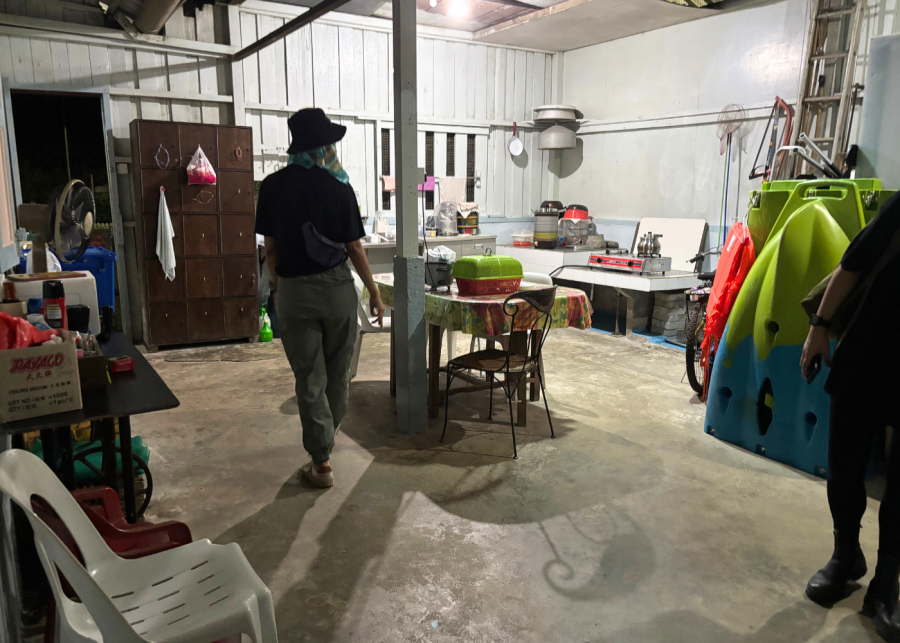
Our tour concludes with a visit to Yong Liang’s aunt, one of the 30 remaining residents living on Pulau Ubin. She welcomes us warmly and insists we feel free to explore while she proudly shows off artworks on the wall. Her home resembles the ones in Kampong Lorong Buangkok, humble and seemingly frozen in time.
We’re treated to ice-cold drinks, and in supernatural fashion, Eugene gathers us around to share our own ghost stories. Some talk about their experiences serving National Service in Pulau Tekong, while others share eerie encounters of camping adventures. By this point, I was all spooked out and ready to go home.
We end on a playful high when Yong Liang’s aunt whips out sparklers for us to play with, something I haven’t done since childhood. It lifted all our spirits and lightened the mildly heavy mood.
The fate of Pulau Ubin might be the scariest thing of all

Before we leave, I speak with Eugene to get his thoughts on the island’s future. During our tour, we learned that new residential permits won’t be issued, which means no new residents can arrive on Ubin. With a dwindling elderly population, this peaceful slice of island living may soon disappear.
Despite living in dense vegetation, Ubinites aren’t allowed to cut down trees to make space or take fruit due to strict regulations from NParks. The temple caretaker gripes about this briefly, commenting about how difficult it is to manoeuvre life on the island.
With our increasing need for land, I imagine Pulau Ubin might soon follow in the footsteps of Sentosa. Polished to create idyllic island living without any of the scrappy parts. Will it be preserved for heritage? I have my doubts (and hopes). However, the saving grace is that its stories stay alive thanks to the residents and activists like Eugene and Yong Liang, who are determined to keep its spirit burning.
At the end of the day, the scariest ghost story might just be watching Pulau Ubin fade away.