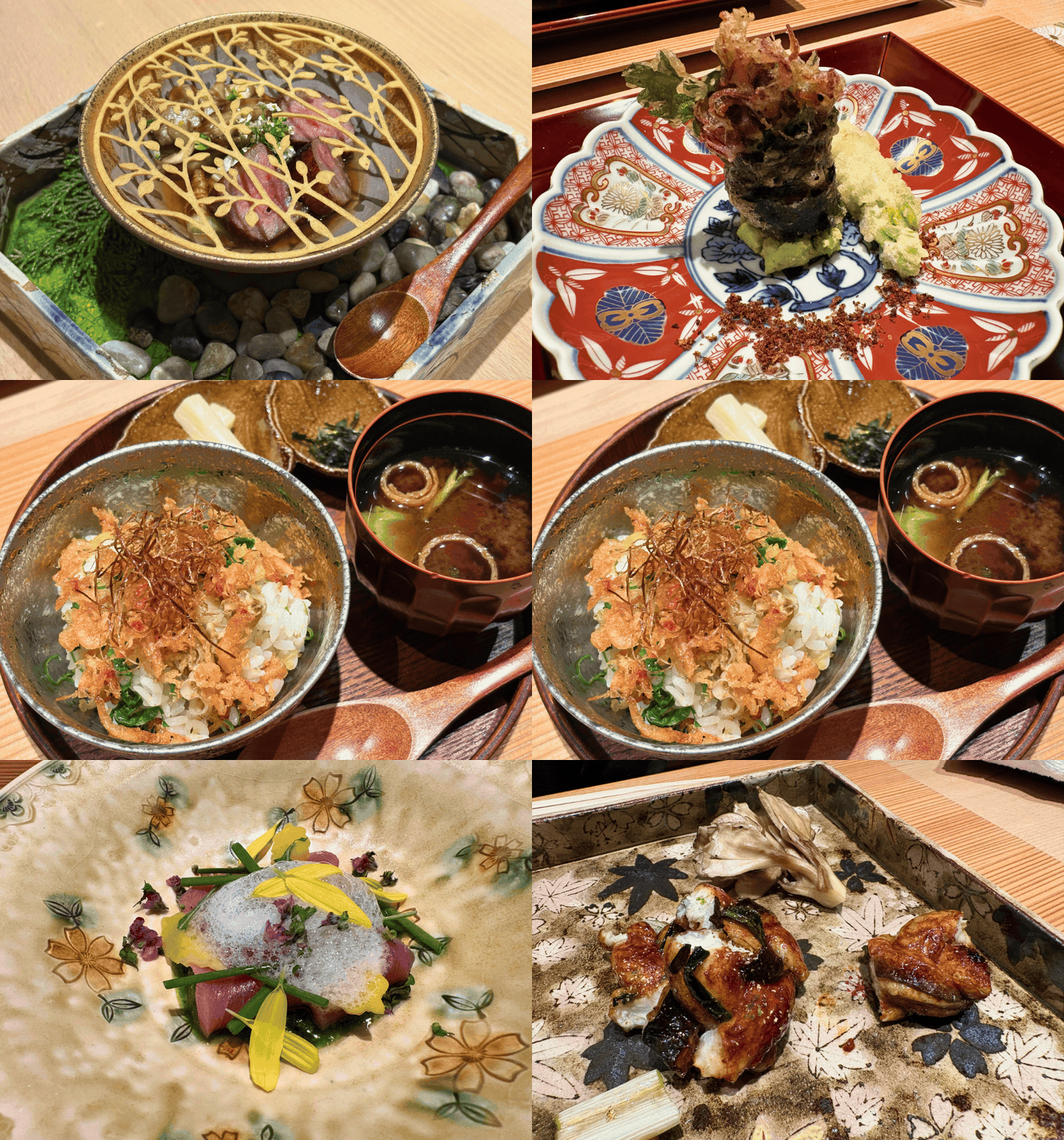
Hachi Restaurant brings its long-running omakase to Tanjong Pagar, pairing seasonal precision with consistency and craft.
As Singapore’s longest-running omakase establishment, Hachi Restaurant has seen it all. Address changes, pandemics, gourmands’ evolving appetites, the little red dot’s ever-shifting dining landscape… there’s never a dull moment throughout Hachi’s two decades of service. The restaurant reopened earlier this year after a nine-month hiatus following its departure from the National Gallery Singapore. But does it still have what it takes to stand alongside the other omakase giants in Singapore? That’s what I want to find out during a weekday lunch visit.
Hachi Restaurant review: Details at a glance
Best for: Impressing someone when you want a quiet flex, not a loud one
Must-try items: Seasonal menu
How much: Lunch sets from $108++; lunch menus from $168++; dinner menus from $238++
Opening hours: Mondays to Saturdays, 12pm to 2.30pm & 6pm to 11pm (closed on Sundays except for pre-bookings and Mother’s Day)
Address: Hachi Restaurant, #01-07, Keppel South Central, 10 Hoe Chiang Road, Singapore 089315
A new chapter in Tanjong Pagar
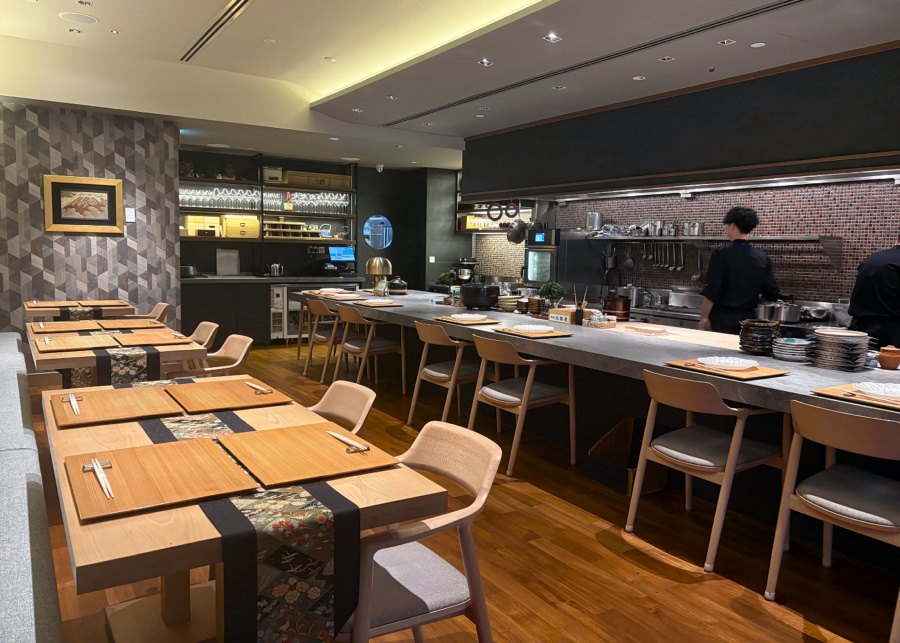
Say hey to Hachi Restaurant’s new residence at Keppel South Central, located within the wider Tanjong Pagar district. The area is poised to become Singapore’s next great haunt, which is probably why Hachi has signed a decade-long lease agreement with the commercial development.
Stepping into the space felt like I was being gently sucked into a vacuum. Outside noises fade away and are replaced by a soothing, unhurried ambience. The interior is decked out in dark-toned wood and stone, similar to other Japanese restaurants in Singapore. My eyes were drawn to the angled mirrors, which have been with Hachi since its Mohamed Sultan location.
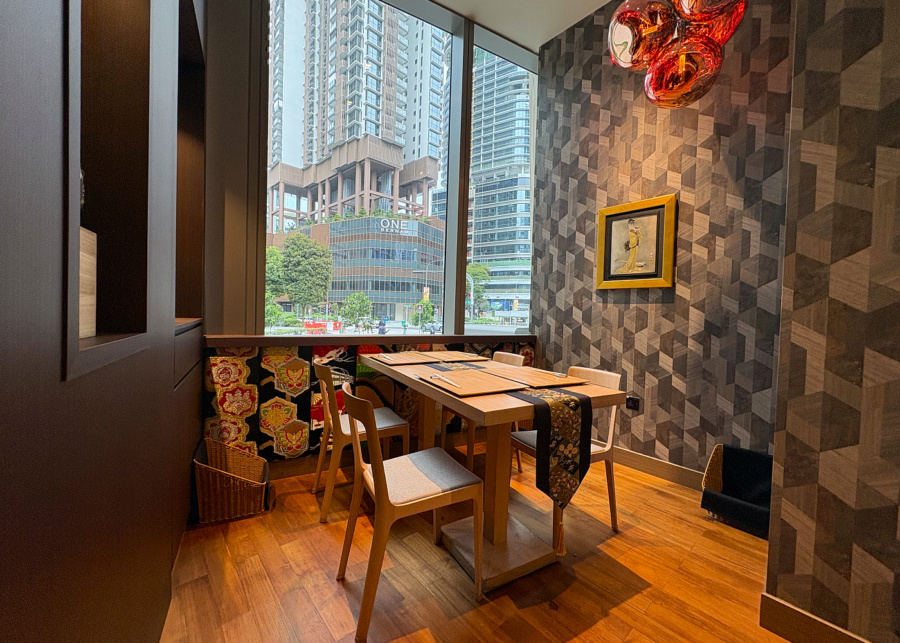
The restaurant can accommodate up to 40 guests, with table and counter seating in the main dining area that lets you peep the team hard at work, and private spots for more intimate gatherings. I liked the semi-private rooms, with large windows that let natural light in and offer a view of the streets. (P.S. There’s no minimum spending for these sections, so you can request them when making a reservation – subject to availability, of course.)
If you get the chance to dine here, pay close attention to the tableware. The colourful pieces feature nature motifs and geometric patterns, lending vibrance to the meal. I was almost tempted to ask if I could take a few of them home!
Veggie-forward start that surprises
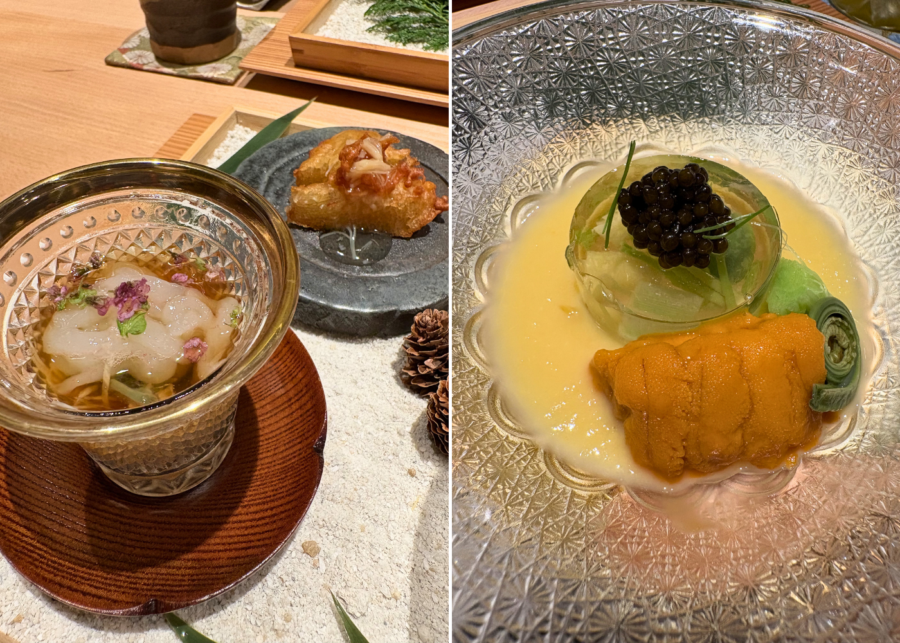
Lunch was courtesy of the nine-course seasonal menu, Hachi omakase in spring. I was told the dishes change due to the availability of fresh imports, so what I was feasting on that day may not be available a few days or weeks later. What I found most interesting: vegetables are front and centre on the menu.
The session started strong with spring mountain vegetable aspic, delicately paired with caviar, uni sea urchin, corn silk, and white asparagus velouté. I felt almost guilty having to eat such a masterpiece, but that feeling subsided once I had it. The accompanying nagaimo mountain yam somen came in gorgeous glassware; you can either slurp it slowly or down everything in one go. Just remember to stir it first so you can rouse all the flavours.
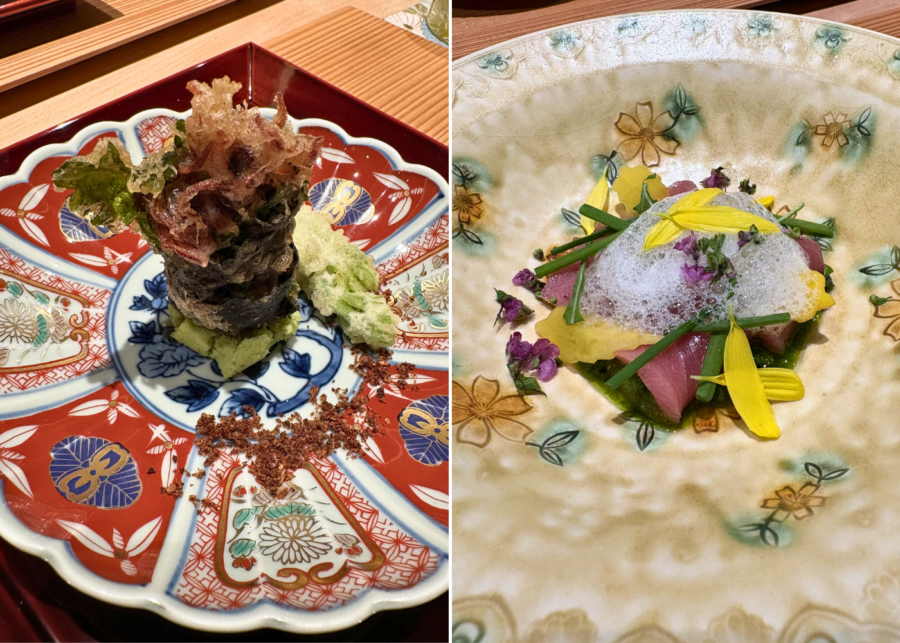
Next up was hotaruika firefly squid isobe-age with edamame puree and roasted negi onion powder. Tempura lovers will enjoy this: crispy with a nice dash of umami from the powder and puree. The chutoro tuna belly earned a thumbs up from me, largely because of the punchy and briny anchovy dressing.
Where the heavy hitters finally arrive
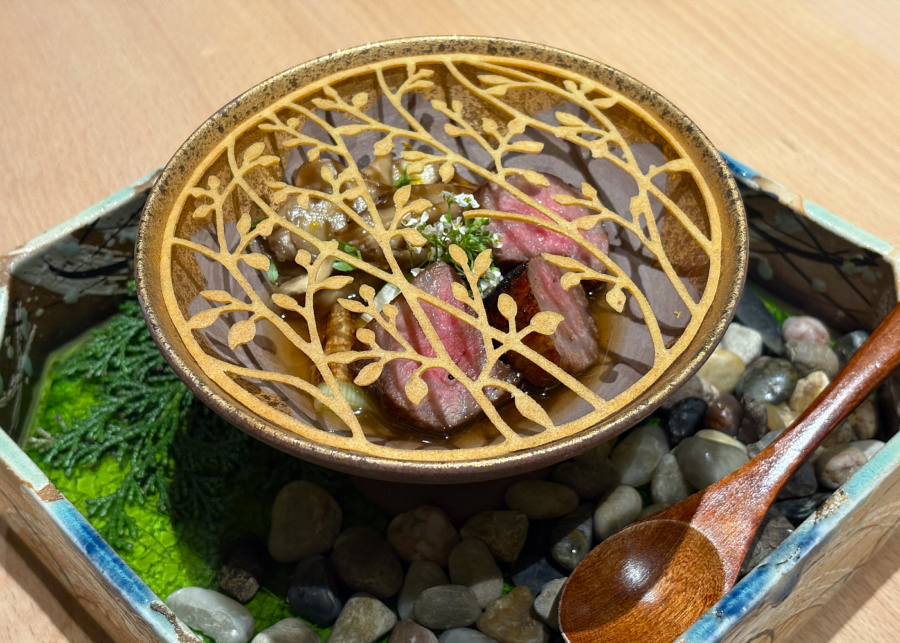
Now, you’re probably wondering: are there no hefty proteins in sight? Don’t worry carnivores, Hachi’s seasonal omakase menu rewards your patience with the yakimono. Picture charcoal-grilled A5 wagyu beef with shironegi (Japanese long onion) and butter maitake mushroom in wagyu dashi broth… this is the course you should be looking forward to. The jagaimo potato art elevates the dish by adding a creative element to the presentation.
In need of more carbs? The ‘gohan’ – sakuraebi shrimp kamameshi, hotate scallop, chamame soybean, nanohana rapeseed, and kinome sansho leaf – will fill you up. I was almost bursting at the seams by this point, but my stomach proved it still had space for more.
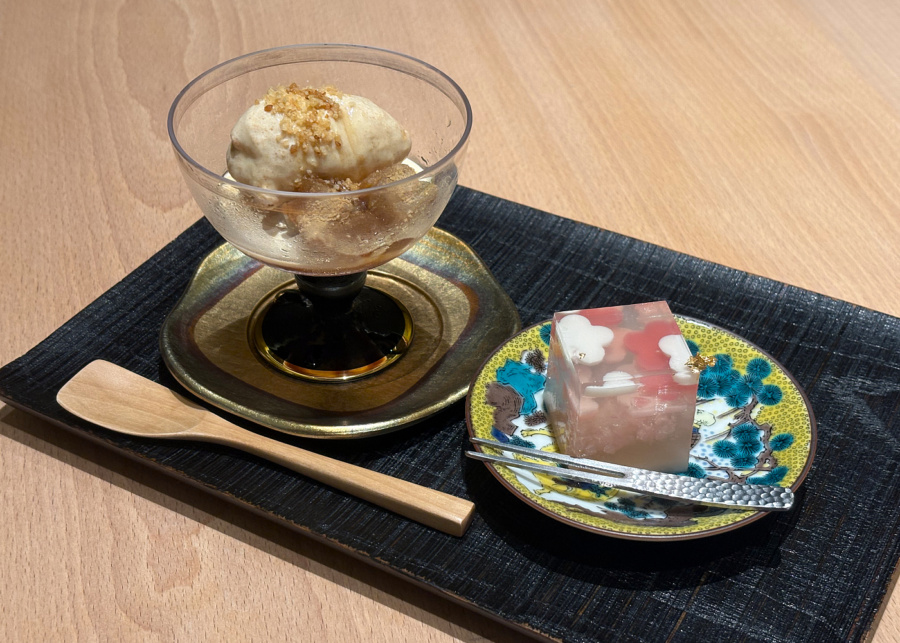
Sweet endings came in the form of kinako roasted soybean ice cream with mochi rice balls and Japanese seasonal wagashi (traditional confections). I couldn’t decide which I preferred. The ice cream and mochi rice balls were more fun to bite into thanks to the various textures, but the wagashi managed to carve a soft spot in my heart. Final thoughts? I say it was a deserving tie.
A legacy omakase that still holds its ground
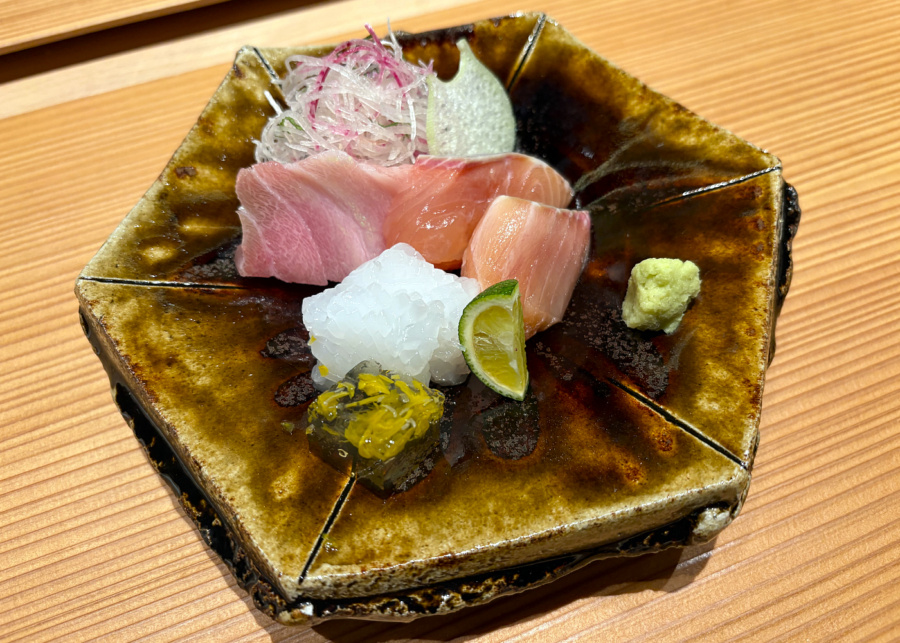
Throughout my meal at Hachi Restaurant, the word that came to mind was authenticity. Each course was made with intention, from the procuring of ingredients (the team constantly travels to Japan to speak with farmers and suppliers) to how everything is prepared. Hachi may not be the trendiest omakase, but it earns respect through consistency and craft.
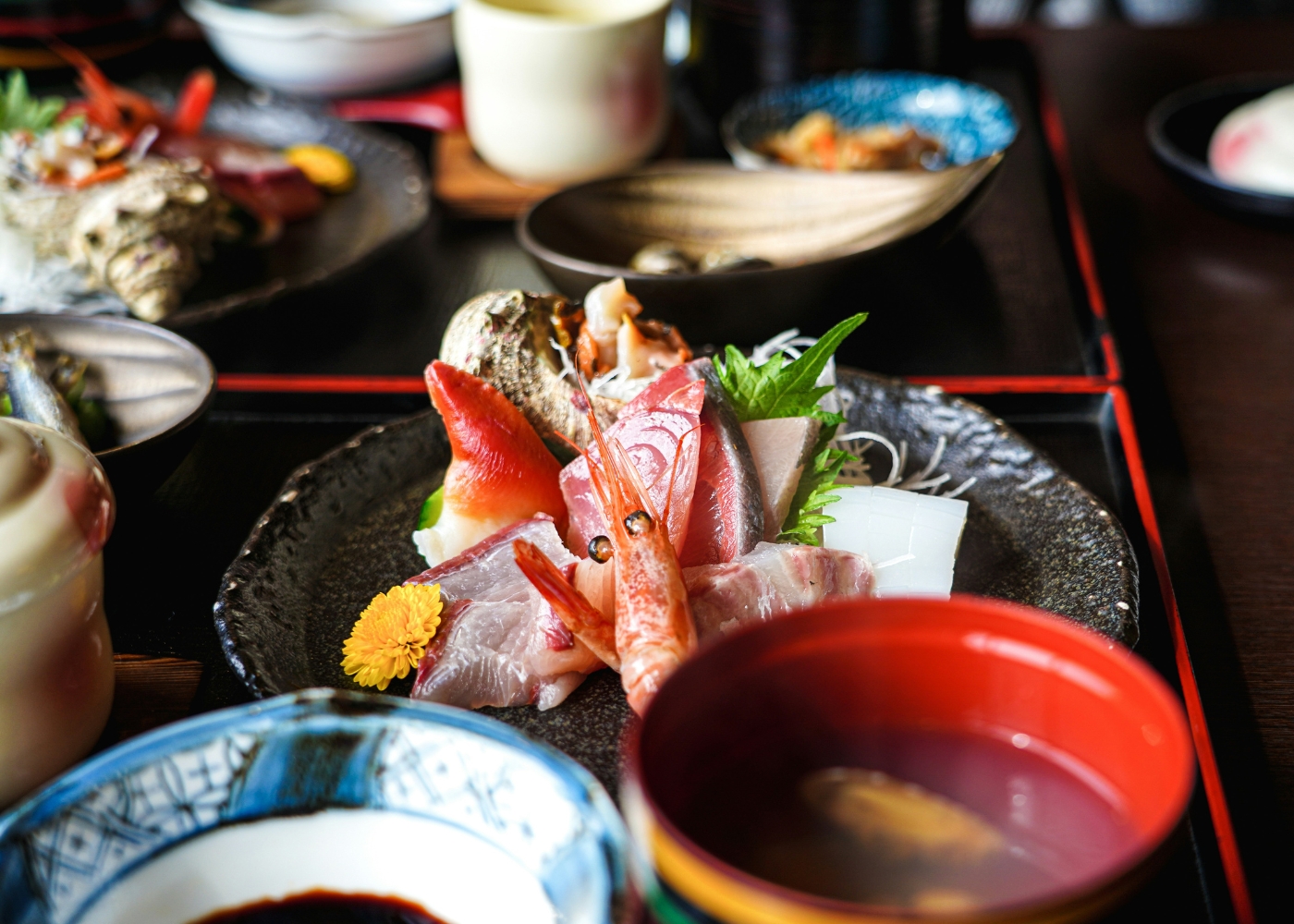
Setting aside 100 minutes of your day for lunch may seem like a stretch to most Singaporeans. Yes, the pacing is a little slow, but that ties back to its craftsmanship. If you have the time or are planning to impress someone, go on and make a reservation. While most dishes played up Hachi’s strengths, if I had to really choose, the sushi and sashimi are just the typical ones you can get at other restaurants.
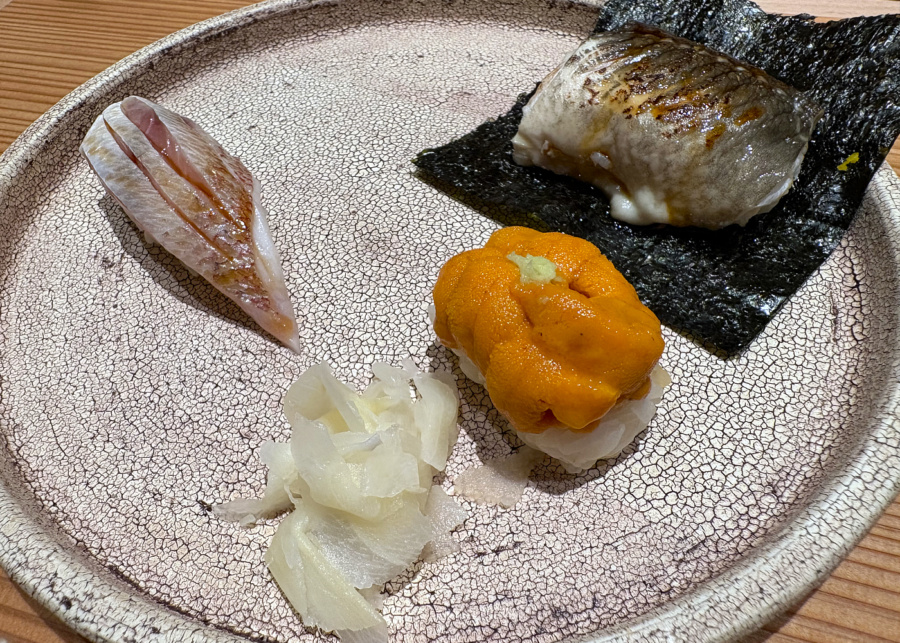
Two decades in our city’s culinary landscape is no small feat, especially with new restaurants constantly cropping up in Singapore and establishments shutting down fast. But Hachi proves it still has what it takes to stand shoulder to shoulder with other omakase spots. It may not be the first place one would think of, but if you’re looking for quiet confidence over flash, Hachi Restaurant is that girl.
Frequently Asked Questions
Who is the team behind Hachi Restaurant?
The brand was revitalised by Fabian Koh, who collaborated with the founding Japanese chefs to turn Hachi into a household name for fine dining. The group also owns popular spot The Public Izakaya.
Why is there a mirror behind the chef's counter?
This is a signature Hachi design element. It allows every guest – even those not seated directly in front of the chef – to watch the intricate knife work and preparation process. It turns the meal into a piece of theatre.
How is the new Keppel South Central space different?
The National Gallery outlet was more traditional and sprawling. The new space is sleeker and more intimate, reflecting modern Tokyo's fine dining. It features stone counters, designer lighting, and a long mirror along the wall that allows guests to watch the chefs work even if their backs are to the kitchen.
Is there a dress code?
Smart casual is preferred. While it is located in a business hub, the atmosphere is upscale fine dining.
Can I request a private room?
Yes, the new location at Keppel South Central features private dining rooms for groups who prefer more intimacy over the interactive "chef’s counter" experience. Booking for these rooms is mandatory.
Are there any nearby sister restaurants?
To improve operational efficiency, The Public Izakaya 2.5 (Nitengo) has opened right next door. It’s perfect if you want a more casual Japanese pub experience after your omakase or for a pre-dinner drink.
