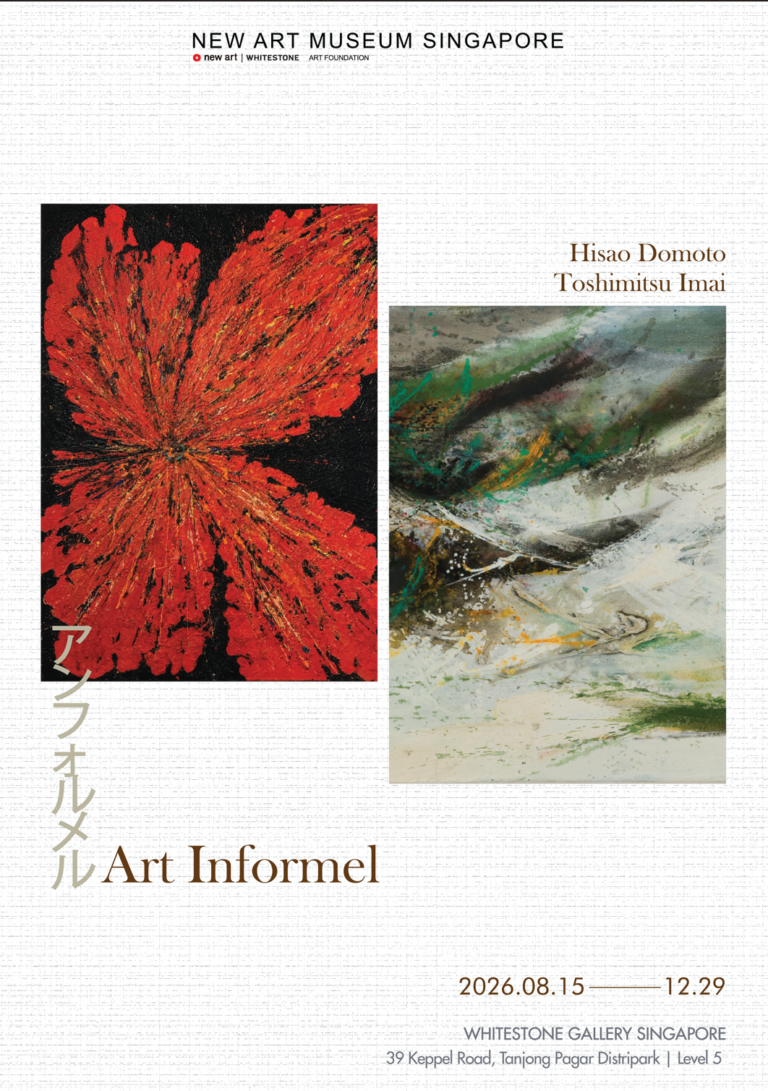
Art Informel, coined by French critic Michel Tapié, is a 1940s and 1950s European abstract art movement emerging from the disillusionment of post-WWII Europe. It means “Art Without Form.” It rejected rational, geometric abstraction in favour of intuition, improvisation, and painterly freedom.
In 1956, Europe’s Art Informel spread in Japan. As Japan’s leading interpreters of the movement, Toshimitsu Imai and Hisao Domoto constructed a new language of abstraction, that is recognised as Japanese Art Informel. By incorporating Eastern philosophies and aesthetics into dialogue with European Art Informel, they forged a powerful cross-cultural artistic exchange that expanded the possibilities of global abstract expression.
Centered on the material and gestural force of the two masters’ practices, the exhibition explores why this European-originated abstract movement became important in postwar Japan through a historical lens, while tracing the similarities and differences between its European and Japanese manifestations. In this sense, Art Informel was more than an artistic movement; it became an intercultural exchange shaped by perception, emotion, and material expression. Emerging from the aftermath of war, it is a universal language of suffering, resilience, and rebirth. The paintings bear witness to confront the profound human cost of war while reminding us of the enduring values of empathy, peace, and our shared humanity.